Cloud-native
Designed for scalable hosting, monitoring and modern release processes rather than on-premise constraints.

System5 is built on modern engineering principles so customers can move beyond fragile legacy systems and create a secure foundation for integration, reporting and responsible AI.
Each customer can operate in a dedicated, configurable environment with tailored workflows, terminology, role permissions and dashboards. An API-first approach supports mobile applications, integrations and future extensibility.
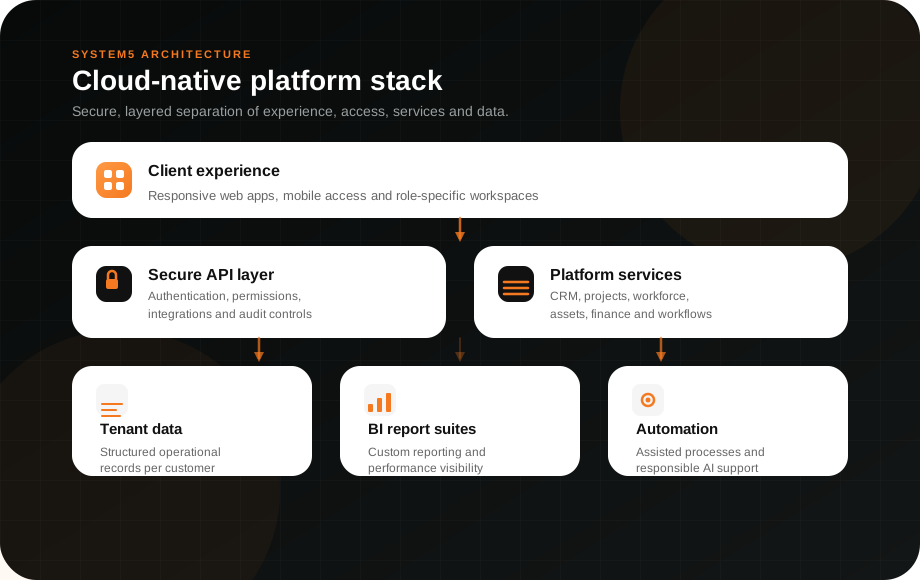
Designed for scalable hosting, monitoring and modern release processes rather than on-premise constraints.
Built to integrate with mobile apps, customer systems, partner services and future automation.
Role-based access, audit trails, encrypted data practices and controlled tenant separation.
Operational data is structured for dashboards, fully customised BI report suites and performance visibility.
System5 turns operational records into useful dashboards: workforce utilisation, project profitability, compliance status, asset performance, finance and service quality.
Monitor work status, shift fulfilment, exceptions, approvals and delivery performance.
Connect timesheets, projects and billing to improve margin control and forecast confidence.
Create client-specific fully customised BI report suites without forcing each organisation into the same reporting model.
System5 is preparing an AI layer focused on secure assistance, data retrieval and operational summaries before moving into more advanced recommendations and forecasting.
Secure chat-based interaction, contextual help, retrieval of operational records and safe summaries.
Suggested shift improvements, compliance alerts, business insight narratives and anomaly detection with human oversight.
Longer-term demand forecasting, asset maintenance predictions, project cost signals and risk early warnings.
A clear delivery model reduces risk: understand the current operation, configure the tenant, migrate data, release modules and improve based on real usage.
Map workflows, users, data sources and the operational problems to solve first.
Set up tenant structure, roles, terminology, permissions and initial module behaviour.
Move critical records from spreadsheets or legacy systems with validation and checks.
Deploy modules in phases, train users by role and support go-live closely.
Add dashboards, automations and integrations as operational maturity grows.